
Do ATS systems really auto-reject resumes?
Some ATS systems can auto-reject applicants when an employer sets a screening rule, but there is no universal resume rejection test. An applicant tracking system (ATS) is software employers use to manage applications. The claim that “75% of resumes are rejected by ATS” is unsupported as a general fact and should not guide your job search.
Silence after an application is discouraging, especially when you meet many of the requirements. Understanding what software can do helps you choose useful fixes, but a rejection email alone cannot explain why an employer passed.
Myth: ATS automatically rejects 75% of resumes
Treat this widely repeated number as an unsupported claim. A reliable rejection-rate estimate would need to explain which employers and systems were studied, what counted as rejection, and whether software or a person made the decision.
The vendor documentation linked below describes particular features, not a universal rejection rate. Without evidence matching the claim’s scope, neither “75%” nor a substitute percentage is a useful fact to repeat.
A resume that is not selected, an application screened by a rule, and a file that cannot be parsed are different outcomes. Combining them under one number hides the very distinction you need to understand.
When automatic rejection really can happen
Greenhouse documents auto-reject rules based on answers to custom application questions. An employer chooses a question, a response, and an action; the software then applies that configured rule.
Its example asks whether an applicant has a Class A Commercial Driver’s License for a role that requires driving a tractor trailer. A “No” answer can trigger rejection when the employer has configured it that way, regardless of how polished the resume is.
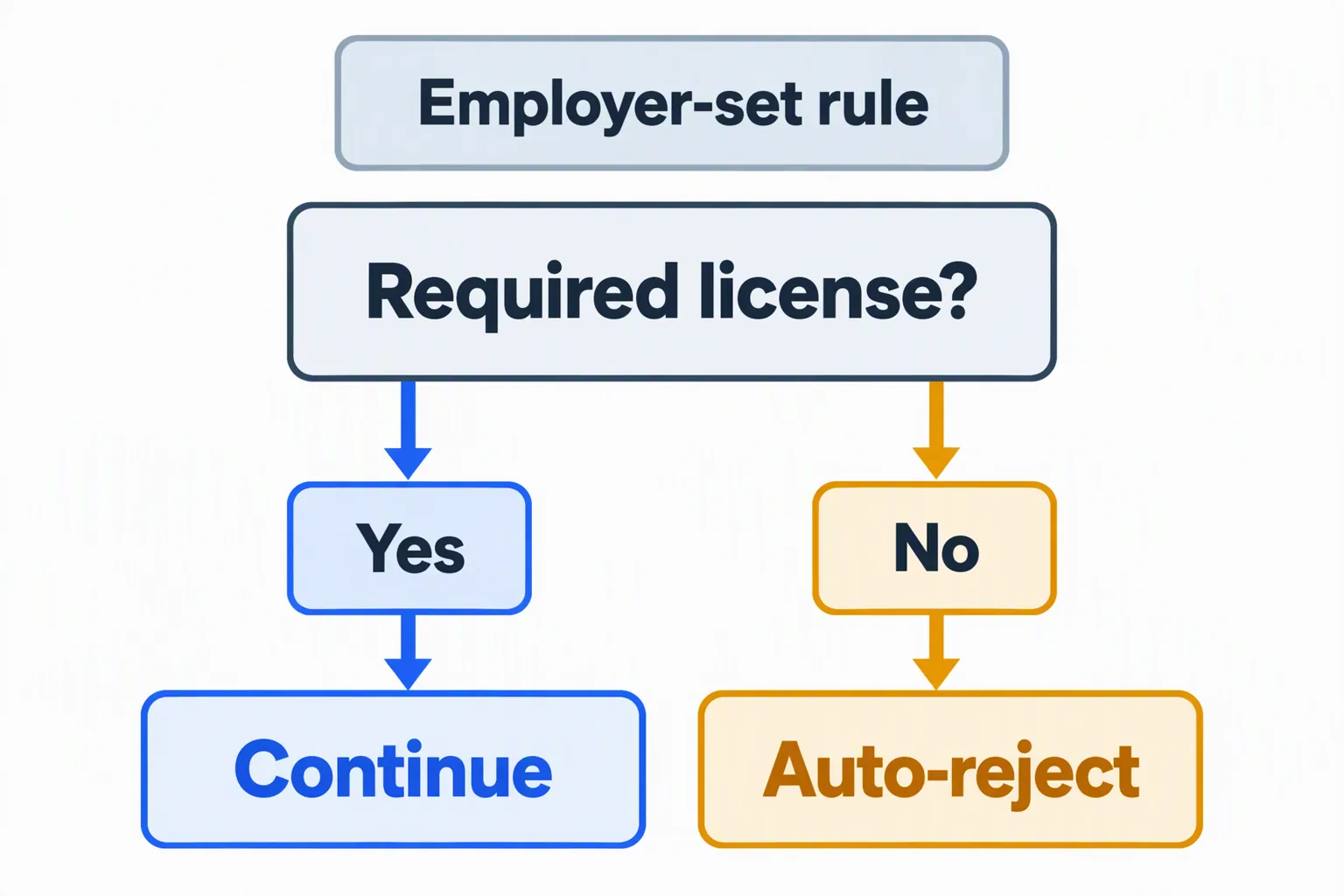
This is a specific capability in one vendor’s system. It does not establish that all employers use automatic rejection, or that every application is rejected through resume analysis. People may review candidates later in the process, while some applications are screened earlier.
Answer application questions accurately. If you do not meet a required qualification, extra keywords cannot supply it; consider whether a different opening fits your experience better.
Myth: a parsing problem always means rejection
Parsing means turning resume information into fields such as contact details and work history. It is separate from deciding whether you qualify. Greenhouse’s unsuccessful-parse guidance says a resume that cannot be parsed may remain attached, with candidate details needing manual entry.
That does not guarantee someone will correct the fields or read every attachment. It shows why a parsing failure is not proof of automatic rejection. If an application fills fields from your resume, check names, job titles, employers, and dates before submitting.
Clear formatting is still useful. For more on how information can be lost or reordered, read how ATS software reads your resume.
Myth: missing one keyword always gets you rejected
Keywords can help recruiters find experience. Greenhouse’s full-text search documentation describes matching candidates to search terms and displaying a snippet of context. A relevant term can matter to a particular search, but this feature does not establish a universal keyword percentage or automatic rejection for every missing word.
Use the posting’s language when it accurately describes your work. If a required skill is missing from your resume, ask whether you have omitted the evidence or lack the skill itself. Those problems need different responses.
Illustrative revision: give a keyword evidence
Customer service, customer service skills, customer support.
Resolved customer billing questions by phone and email, documenting follow-up in Salesforce.
This fictional example replaces repetition with an action, a problem, and a tool. Use this wording only if it describes your actual work; a missing metric is better than an invented one.
Repeating terms or hiding white text does not make your qualifications stronger. Copying the job description into your resume can also misrepresent what you have done. Write evidence that you can explain in an interview.
Myth: a high ATS score guarantees human review
This checker’s score is feedback from this tool, not a score provided by the employer. It cannot reveal the employer’s screening settings, the applicant pool, or whether someone will review your application. There is no universal passing threshold it can certify.
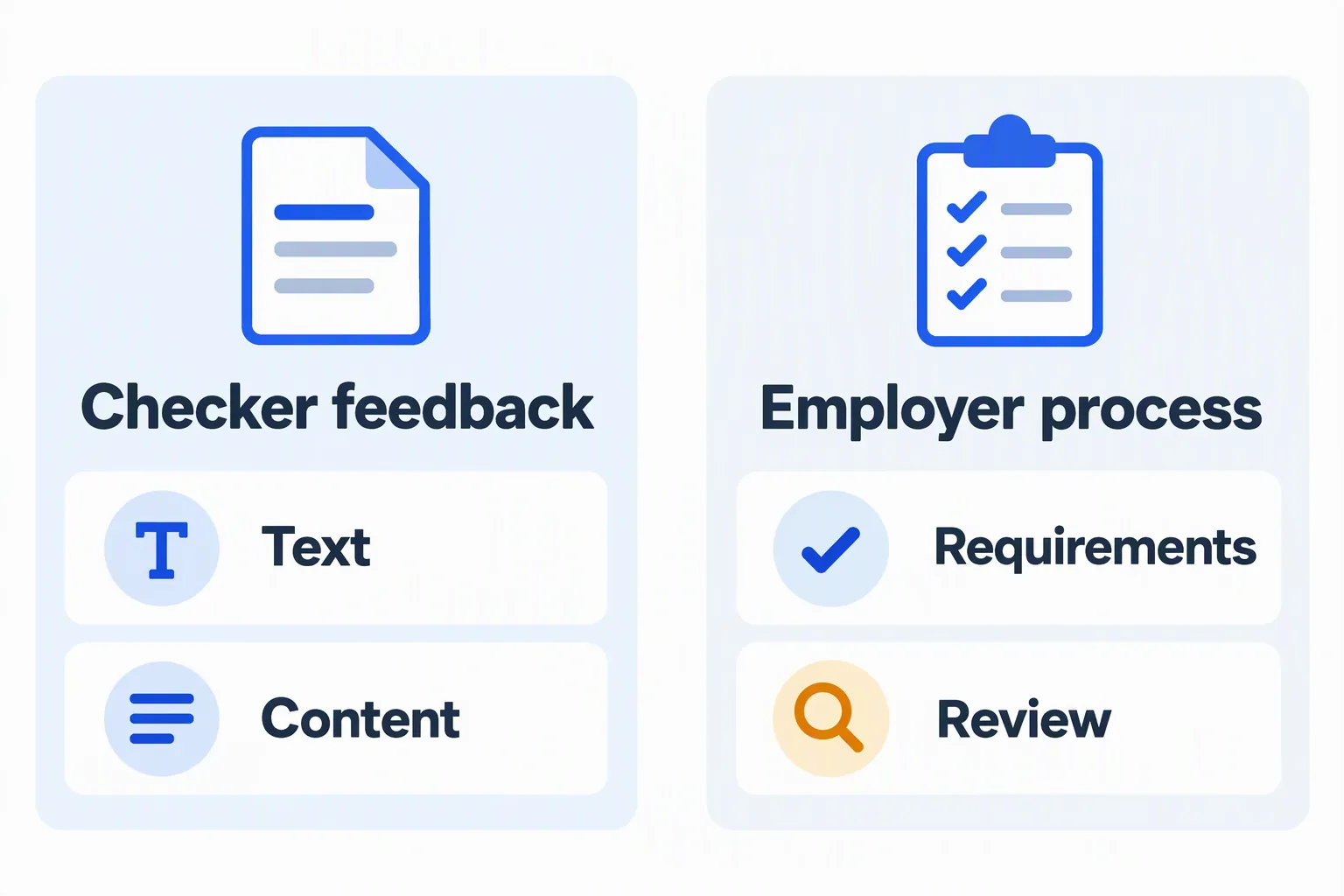
The site accepts PDFs and extracts text in your browser; those checks do not measure the original layout, fonts, or columns. It does not recognize words inside scanned images through optical character recognition (OCR), and extractable text does not certify compatibility with every employer’s parser.
After consent, your PDF and optional job description go to Democruit for AI analysis with Azure AI. Content feedback and job comparison are distinct: without a job description, the report is not a comparison against a specific opening. See the fictional sample report for how feedback is presented.
Myth: a fast rejection or no response proves ATS blocked you
An automatic rule can send a rejection email, as Greenhouse’s documentation explains. But timing alone does not identify the rule or prove your resume failed a keyword test. An email may give too little information to distinguish automation from another decision.
Low response rates can also reflect role fit, competing applicants, or an employer’s changing hiring plans. These are possible explanations, not a diagnosis of your applications. Look for patterns across the roles you choose and the evidence you present without treating every silence as a formatting failure.
What to check before your next application
- Read required qualifications and distinguish them from preferences. Check your actual eligibility before rewriting.
- Follow the employer’s file instructions. Review any fields filled from your resume and correct errors.
- Explain relevant skills with truthful examples. Keep job titles, employers, dates, and contact details easy to find.
- Check application answers and proofread the final document. Use feedback to prioritize fixes rather than chase a perfect score.
Use feedback to make a clearer application
Automatic screening exists, but a checker cannot tell you exactly why an employer rejected you. Focus on readable information, accurate answers, and evidence that matches the role.
Run the free ATS resume check to identify details worth reviewing. For help arranging your work history clearly, read Democruit’s guide to resume formats.
Vendor documentation checked October 4, 2026. The illustrations and revision example are fictional; employer settings and software features can change.
Frequently asked questions
Do ATS systems automatically reject resumes?
Some systems support automatic rejection through employer-configured rules, including rules based on application answers. That does not mean every resume receives an automatic keyword test or that every application reaches a human.
Is it true that ATS rejects 75% of resumes?
There is no verified basis here for that figure as a universal ATS rejection rate. It should not be used to estimate what happens to your application or presented as an established fact.
Does an immediate rejection prove my resume failed ATS?
No. A quick email can be consistent with an automatic rule, but its timing does not reveal the reason for the decision. Review the stated requirements and your application answers before assuming formatting or keywords caused it.
Can a high ATS checker score prevent rejection?
No checker score can override an employer’s requirements or guarantee review or an interview. This site’s feedback concerns your resume content and, when you supply a job description, its relevance to that role.